Purchasing and maintaining a motorhome battery
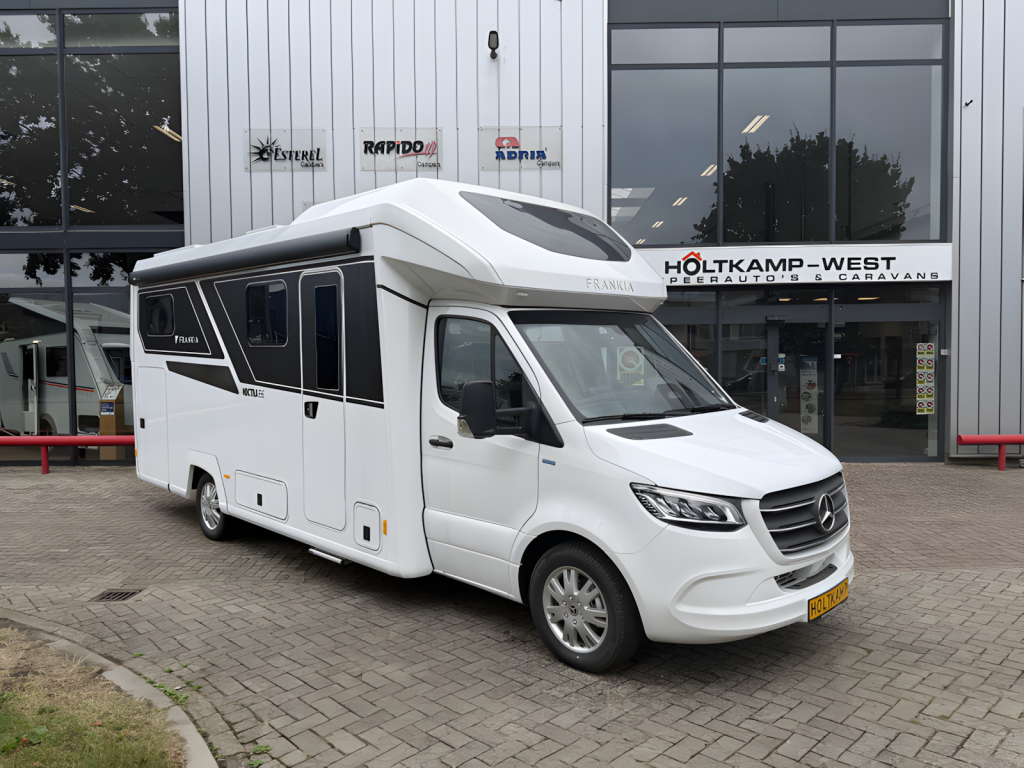
The demand for motorhomes and cars converted into motorhomes has increased in recent years. Not surprisingly, as traveling with this vehicle gives a sense of freedom. You benefit from more comfort than camping in a tent or folding camper. Other advantages of a motorhome include the vehicle's higher load capacity, a wider choice of pitches, and the ability to use the living space a motorhome offers even while driving. Logically, choosing a motorhome over a caravan or tent does not exclusively offer advantages. For instance, a motorhome is less suitable for excursions at your holiday destination; bringing a separate scooter or bicycles can be a solution for this.
Another aspect to consider is the higher maintenance and repair costs for the motorhome. Think, for example, of the periodic need to replace the battery in the motorhome. What are the most important factors to consider? How does the battery in a motorhome compare to the battery of a Prius or similar passenger car? You can read more about this in this article.
Leisure battery as the heart
A well-functioning leisure battery is essential for using the various electrical systems in a motorhome, such as the lighting, refrigerator, and boiler. Motorhomes typically use a different type of battery than regular passenger cars. For various reasons, the latter batteries are not suitable for charging a camera, switching on a small heater, etc.
In motorhomes, a distinction is made between two types of batteries: the lithium-ion battery and the AGM. A lithium-ion battery is relatively light, compact, and more durable than the AGM variant. Conversely, the AGM battery is offered at a lower price than the lithium-ion leisure battery for motorhomes. Keep in mind that the price difference can be up to fourfold, with an AGM battery of 250 euros being equivalent to a lithium-ion battery of 1,000 euros for the same capacity. It is common to opt for a 12V battery in motorhomes.
Discharge depth in different batteries for motorhomes
Not only do different lithium-ion batteries and AGM batteries for motorhomes differ in weight, size, and durability. Another important aspect is the difference in discharge depth. For example, an AGM battery can only be discharged up to 50 percent before it needs to be recharged. For a lithium-ion battery, the discharge depth is a maximum of 95 percent, although it is recommended not to exceed 80 to 90 percent. This benefits the durability of the motorhome battery.
Combining a motorhome battery with solar panels
You can combine a motorhome battery with solar panels. This combination makes it possible to generate some of the required electricity yourself. When combining a motorhome battery with solar panels, you will need a charge controller in addition to these components. The charge controller converts the voltage of the electricity generated by the solar panels to a voltage suitable for the battery. For illustration: solar panels often reach a voltage of 16 to 20 volts, whereas motorhome batteries can often handle a voltage of 12 volts.
Maintenance of motorhome batteries
Both the motorhome battery and the battery under the hood need maintenance. You want to avoid deep discharge, as discussed earlier. It can significantly reduce the lifespan of a motorhome battery. Using a trickle charger can be an option to keep the leisure battery in the motorhome in good condition when you place it in winter storage. Is the motorhome battery due for replacement? Seek advice from a specialist.
For a regular passenger car, choosing the right replacement battery depends on the type of car and your driving behavior, according to AUTODOC. “Choosing the right battery depends on the type of car and your driving behavior. Check the power and dimensions of the old battery to find a suitable model. The part must be able to meet the electrical requirements of the car in question. Pay attention to specifications such as the cold-cranking amperage (CCA) and capacity (Ah). Do you drive many short distances? Then opt for a battery with a higher charging cycle. Special AGM batteries are suitable for cars with a start-stop system. Ask for advice from a specialist or consult your car's manual for recommendations. This way, you can be sure that the battery is reliable and will last a long time.”
Other maintenance for a motorhome
Not only the battery needs maintenance; also look at more general maintenance work. For example, it is important to check the lighting around the motorhome and check the tire pressure before departure to reduce the risk of a blowout. The engine oil will also need to be replaced periodically. It is important to check the viscosity class of the oil.
| Viscosity grade | Application |
| 0W-20 | Suitable for longer distances, in summer and winter. |
| 0W-30 | Suitable for medium distances, in summer and winter. |
| 5W-30 | Suitable for medium distances, in spring |
| 10W-30 | Suitable for medium distances, in the summer. |