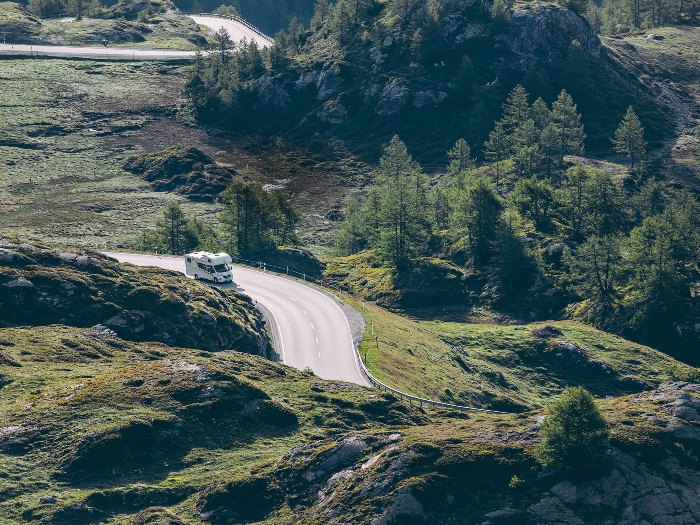
Driving a motorhome: tips for beginners
It looks impressive, but driving a motorhome is easier than you think. If you can drive a car, you can also hit the road with a motorhome. There are a few things to keep in mind. CampersCaravans provides tips.
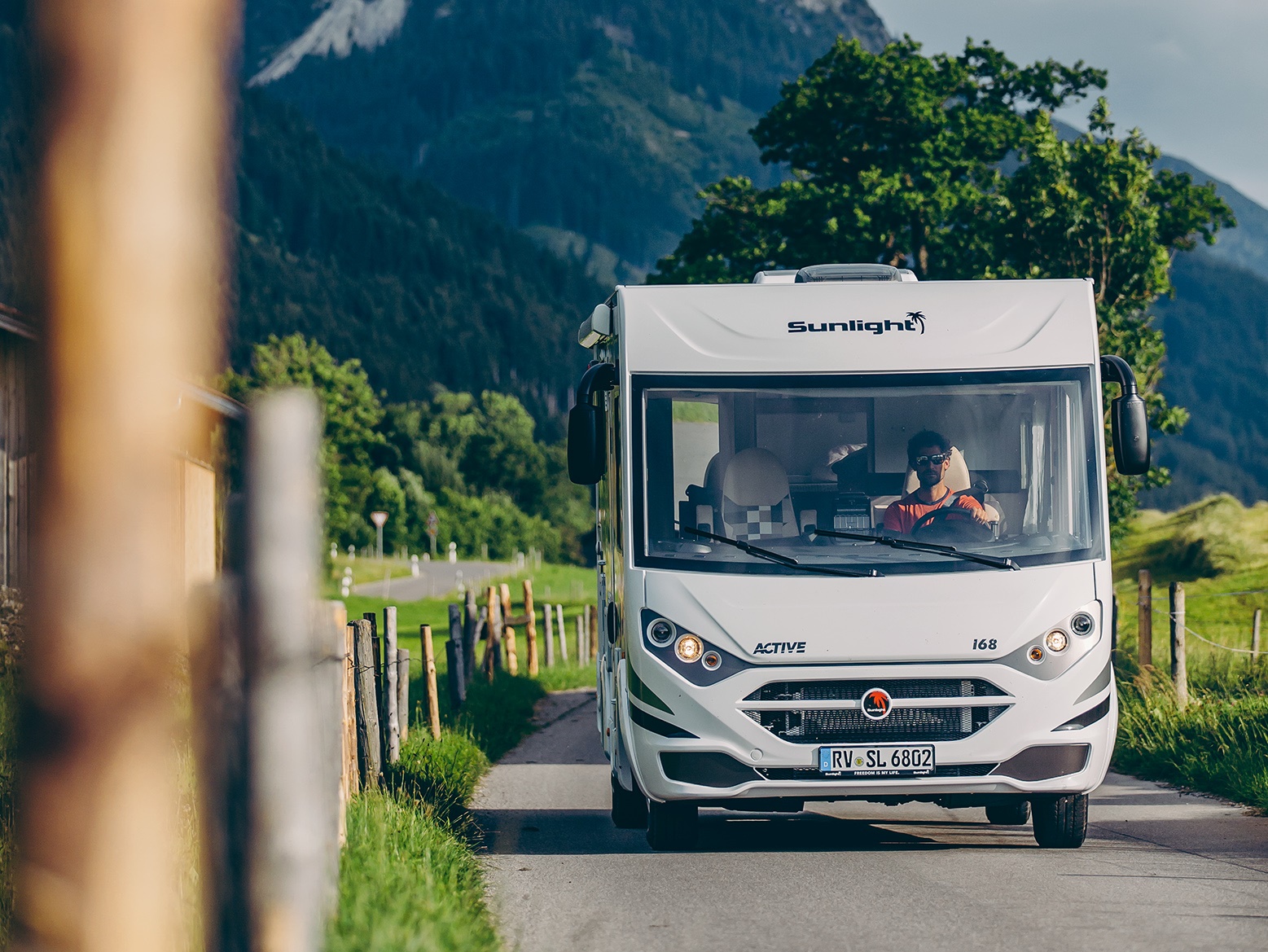
A motorhome is considerably heavier than a passenger car. And taller, longer, and wider. To start with the latter: you'll need to drive a bit closer to the center line with a motorhome to keep it in the middle of your lane. Due to its height, the motorhome is also more susceptible to crosswinds and gusts from passing coaches – so check your mirrors more often so you're not surprised by them. Something else to consider: the weight. You're on the road with a vehicle that's almost three times as heavy as a passenger car, and although motorhomes brake excellently, it's wise to keep some distance from other road users.
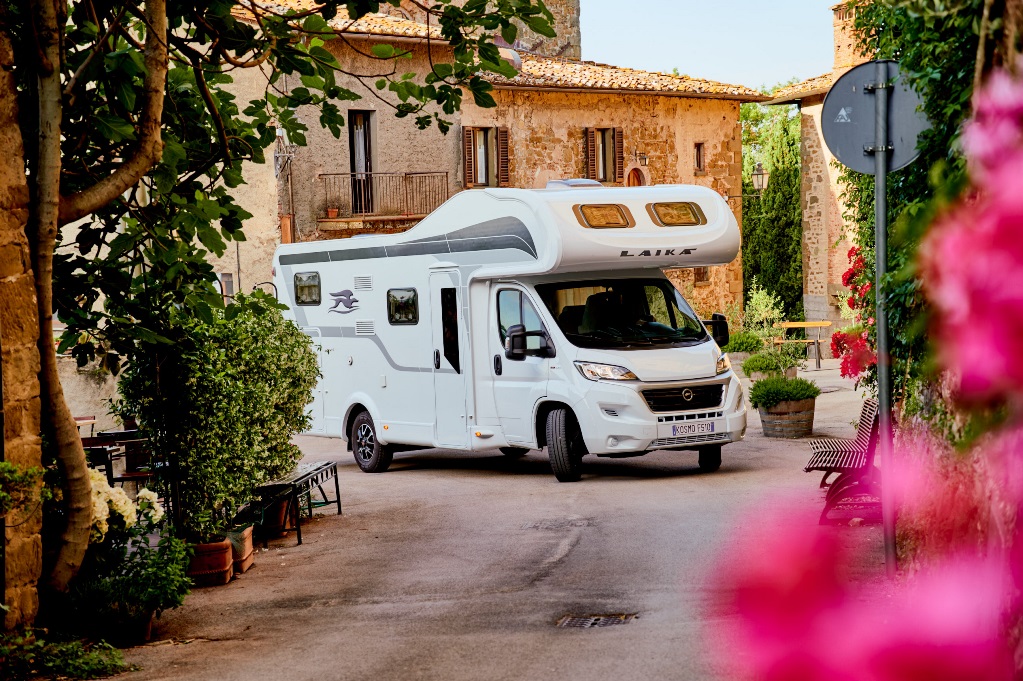
Tip: sticker on your dashboard
Stick a sticker with the dimensions of your motorhome on the dashboard. This way, you'll have the height (including satellite dish!), width, length, and weight immediately at hand if you suddenly see a warning at a bridge or viaduct.
Something new motorhome drivers need to consider is the wheelbase: the distance between the front and rear wheels of the motorhome. With a motorhome, this is larger than with a passenger car. This means that when driving a motorhome, you need to take corners a bit wider to avoid driving over the curb with the rear wheels. So, steer in a bit later. In sharp turns, you also need to consider the length of the motorhome behind the rear wheels. The back of the motorhome protrudes quite a bit, sometimes a meter and a half, which means you have a significant 'swing out', especially in sharp turns. You'll notice this particularly when exiting parking spaces, after refueling, or when turning into narrow streets. The tip for these situations: use your turn signals, adjust your speed, and don't let yourself be rushed. Look carefully in your mirrors and, if necessary, ask your co-driver to give directions from outside.
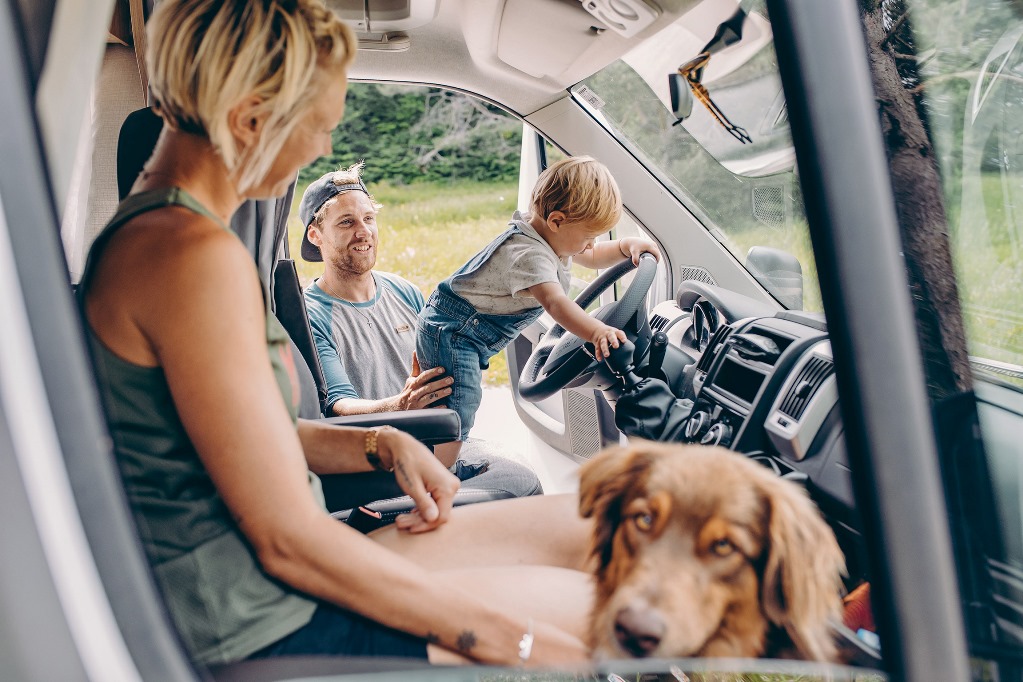
Tip: before you start driving
Before departure, check that windows, luggage hatches, and roof hatches are closed (even in the bathroom). Stow away loose items and keep the window blinds open: for better all-round visibility and to prevent you from being startled if they suddenly come loose when you drive over a bump.
Motorhomes have double mirrors on each side: a 'regular' rearview mirror and a so-called blind spot mirror. The latter can be adjusted so that you can also see overtaking cars right next to the motorhome, but also, for example, cyclists at traffic lights. The blind spot mirror also shows a large part of the side of the motorhome: this way you can easily see if you are still between the white lines of your lane. Another important aid when driving a motorhome is the reversing camera. This usually has two positions: straight down, as a maneuvering aid when reverse parking, and straight back. You can also use the latter position as an 'interior mirror' to keep an eye on traffic behind you.
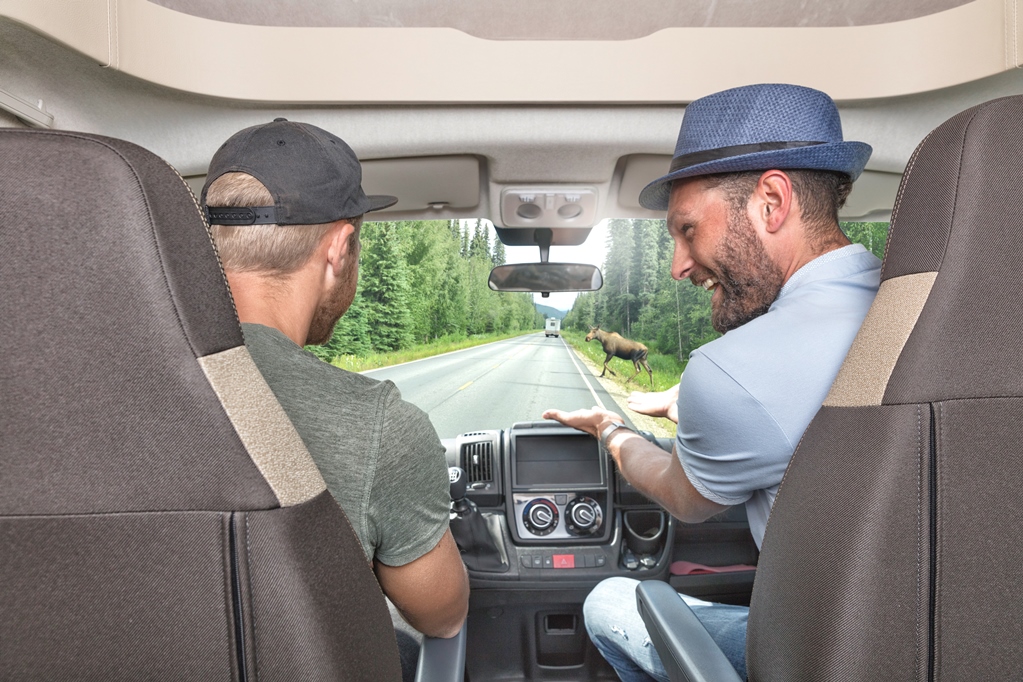
Tip: loading
Light items in the upper cabinets, heavy items at the bottom, preferably between the axles of the motorhome. Beware of overloading. Don't immediately fill your entire fresh water tank – twenty liters of water is more than enough for on the road. And only take groceries for the first few days.
Despite their considerable weight, modern motorhomes can keep up well with traffic. A good cruising speed on major roads is around 100 km/h: fast enough to easily overtake trucks. On smaller roads, 80 km/h usually applies. On winding country roads, perhaps even a bit slower, because the motorhome usually leans slightly in bends due to its higher center of gravity. This can cause a traffic jam behind you. If that happens, just find a place to stop so that the string of passenger cars can pass you.
Tip: motorhome navigation
A 'normal' navigation device does not take into account the dimensions of your motorhome – special motorhome navigation (such as from Garmin and TomTom) does: you can enter height, width, and length, after which the device calculates an adapted route.
The fun of motorhome holidays is that you can easily cover long distances on highways and then enjoy scenic routes. However, do keep the dimensions of your motorhome in mind. Trees don't grow perfectly straight, and overhanging branches – or rocks – can damage your motorhome. The same applies to crooked lampposts, especially if there's also a manhole cover next to the pavement – when parking, you'll quickly hit such a lamppost; damage is easily done. Also, pay close attention on location. A reversing camera perfectly sees how much space you have at the rear bumper, but that overhanging branch at the roof… it doesn't see that. In unclear situations, it's helpful if the co-driver looks from outside. And not behind the motorhome, but next to it, at the back. This way, you maintain eye contact with the driver, and with the window open, you don't have to shout at each other.
Tip: overnight stay
With a motorhome, you can go to campsites and special motorhome pitches near a village, a marina, or a restaurant. Once you've found your spot, it's nice if the motorhome is level. That makes for a better night's sleep. For this, you use special ramps for the front wheels. Be careful not to shoot off the wedge; let your fellow passenger give directions from outside.
Looking for?
On CampersCaravans you can choose from a wide range of campers. Also if you are looking for a caravan seeks, you've come to the right place. Of course, you can also find much more camping tips and camping news on our website. Your adventure starts at CampersCaravans.nl.