Types of motorhomes: which model suits you?
Motorhomes come in all shapes and sizes, from the smallest minibus to a large touring coach. Whatever layout you want, or whatever your taste, there is plenty of choice. The most common motorhomes can be divided into four basic types, with a number of specials in addition.

Van conversions
A van conversion is built on the basis of a panel van. The body of the panel van is largely preserved. The roof is generally raised and sometimes equipped with a pop-top roof. In that raised section, there are sometimes also one or two berths.
Due to its compact dimensions, the interior space is somewhat limited, but a van conversion is the easiest to drive and park in a normal parking space. This can be a great advantage, especially in cities and on narrow roads. Another advantage is that the exterior consists of the metal body of what was originally a commercial vehicle. A lot sturdier than a caravan body, which is constructed from lightweight, and therefore somewhat more vulnerable, aluminum or polyester.
Van conversions have been enjoying increasing popularity, especially in recent years. Because they are easy to drive, they are also used for daily transport. A used van conversion therefore usually has more kilometers on the odometer. In addition, among DIY builders, van conversions are the most commonly used type.

Overcab Motorhomes
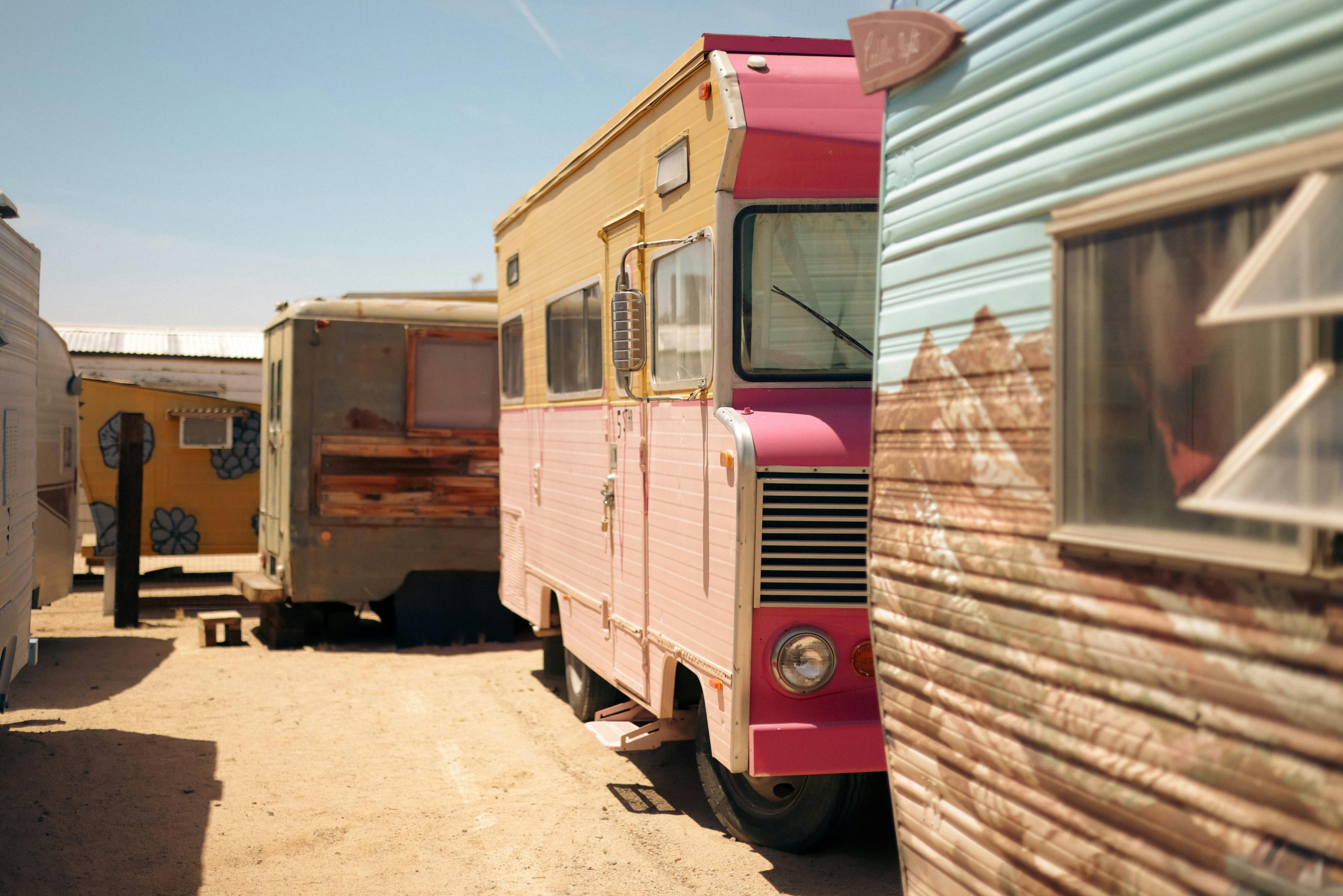
This motorhome is recognizable by the large extension of the living area above the cabin, which offers space for a double bed, or overcab bed. An overcab motorhome is built on the basis of a panel van or truck chassis with a cabin. The living space is generally spacious, but the overcab is not equally aesthetically pleasing to everyone. It also has negative consequences for the driving characteristics. The view for the driver and co-driver is limited. The wind resistance is considerably higher, which in turn has a negative impact on fuel consumption. Rental companies in particular make extensive use of overcab motorhomes, as they offer relatively a lot of space for the purchase price. It is also the ideal motorhome for families due to the surplus of berths.

A-class Motorhomes
In an A-class motorhome, the motorhome is built exclusively on a chassis. The cabin of the panel van or truck has therefore been omitted. This motorhome has its own cabin that seamlessly connects to the living area. Above the cabin, there is often space for a lifting bed. Due to the special construction with an integrated cabin, this model is the most expensive to purchase. For many, this type is therefore the ultimate motorhome. However, not for everyone, as the comparison with an SRV truck is sometimes made. An advantage that applies to everyone is the view. Through a mega large windshield, you can see the holiday landscape pass by unhindered.

Semi-integrated Motorhomes
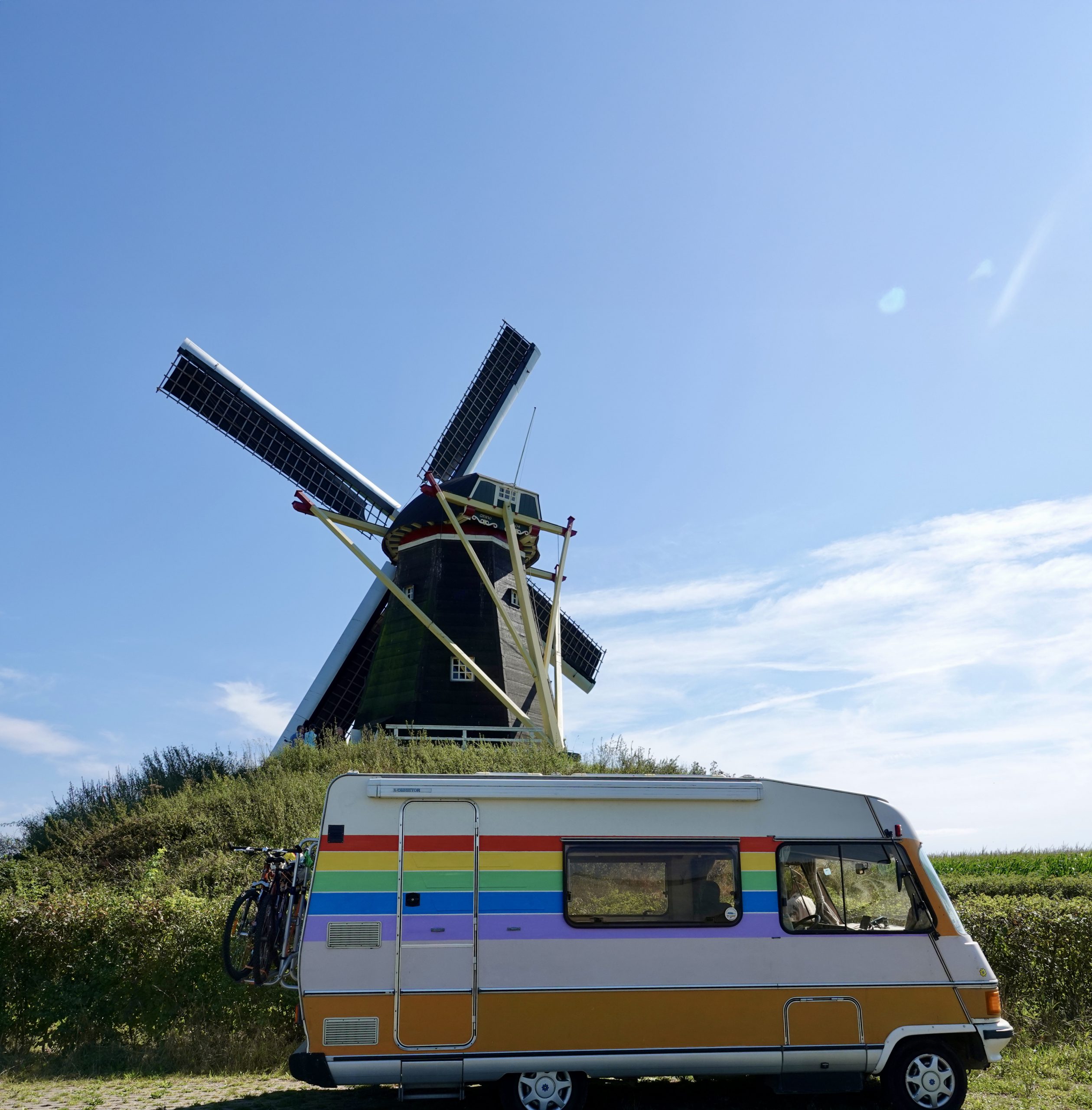
A semi-integrated motorhome, also called a semi-integrated motorhome, is a middle ground between a van conversion and an A-class motorhome. The transition between the cabin and the living area has been made smoother, and the roof above the cabin has been adapted into a streamlined whole. These compact models usually have a somewhat narrower living space, but this makes it easier to drive a semi-integrated motorhome on smaller roads.
The semi-integrated motorhome is quite similar in appearance to an A-class motorhome, without the need for a special cabin. This type is therefore becoming increasingly popular, mainly at the expense of overcab motorhomes.

Specials
A demountable unit, a container with the living area that can be placed separately, was particularly popular in the 80s and 90s. All-terrain vehicles and pick-ups were emerging then with a loading area suitable for this. The advantage is that the car can be used all year round without the unit. You also have a car available at the campsite without having to break everything down. The disadvantage is the limited space and the strict separation between the cabin and the living area.

For adventurers, there are expedition motorhomes. Generally custom-made in many variants. The basis is often a four-wheel-drive truck or panel van chassis, a Unimog, an extended Land Rover, or a former military vehicle. These motorhomes are also often self-built.
Finally, a converted touring coach offers many possibilities to be converted into a motorhome. This is mainly done by DIY builders, although exclusive motorhomes based on a touring coach are also produced, often for commercial applications such as a racing team or sports teams.
Looking for a new motorhome? Here you will find motorhomes of all shapes and sizes