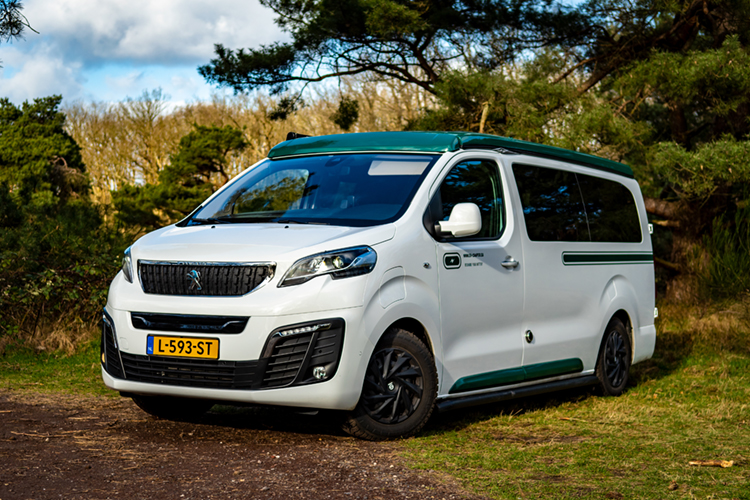
EV Camper: the e-Fixxter in practice
Recharge your battery is the spin-off under the EV Camper logo. That is a double truth. With an electric Fixxter camper, you can indeed recharge your battery in a very relaxed way. The fact that the e-Peugeot also needs this is part of the new way of driving. How that is with a camper that doesn't like diesel, the e-Fixxter we get to take with us will show.
EV-Camper is an initiative of Audrey and Rutger who rent out 100% electric campers for a carefree and sustainable journey. This activity has been taking place since 2020, stemming from the desire to bring camper rental as it was into the present day. Innovation naturally takes precedence in this. With the e-Fixxter, EV Camper rental was one of the first to use this electric camper for rental. Later this year, this trick will be repeated with the introduction of the XBus, with which six EV campers will be driving around with a driver who is most likely converted. Electric driving not only has the future, it's also fun.
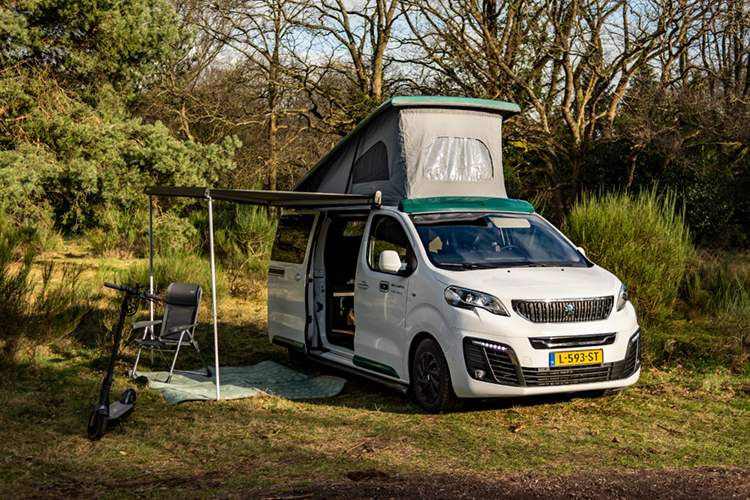
Peugeot e-Fixxter
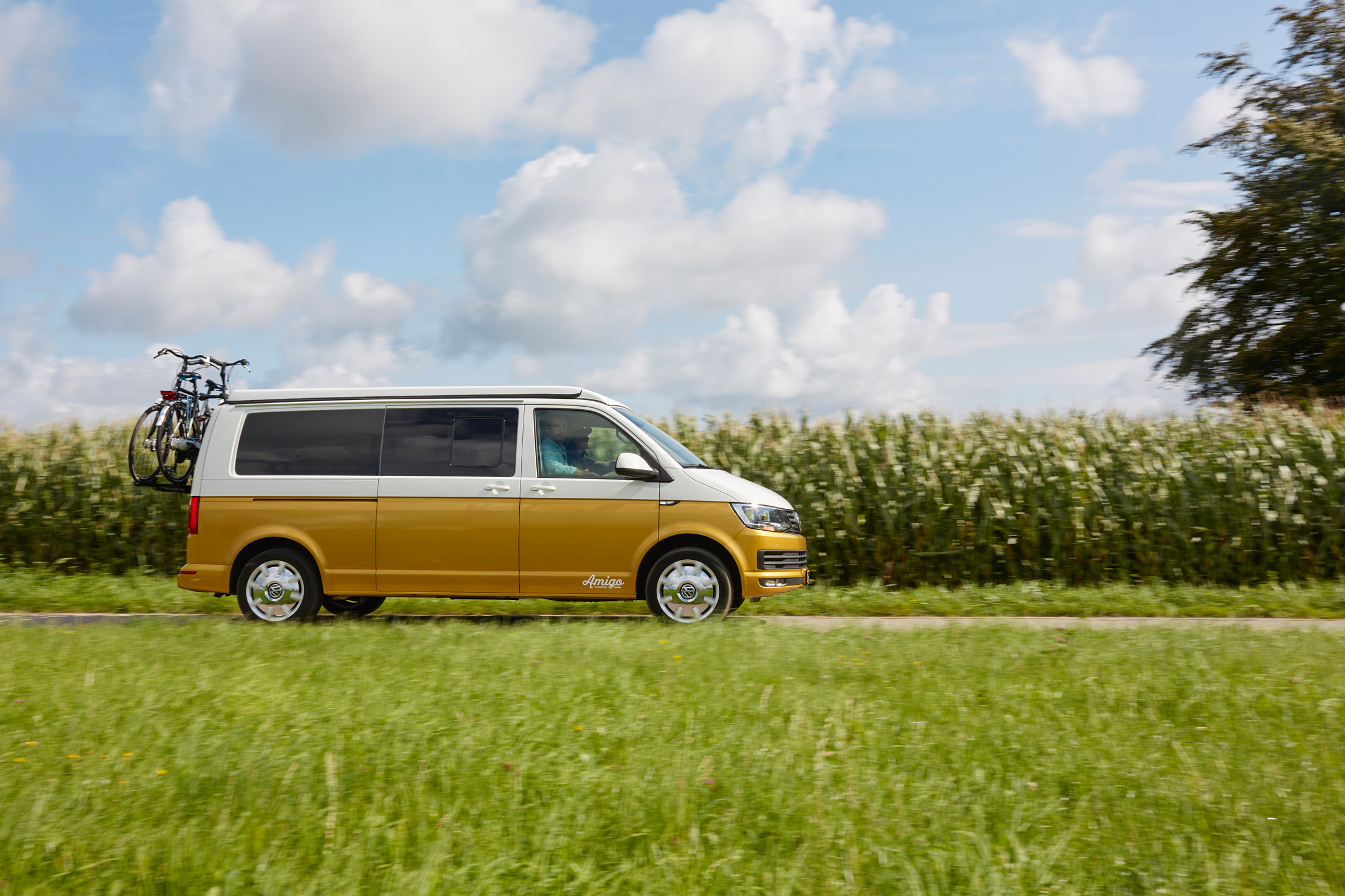
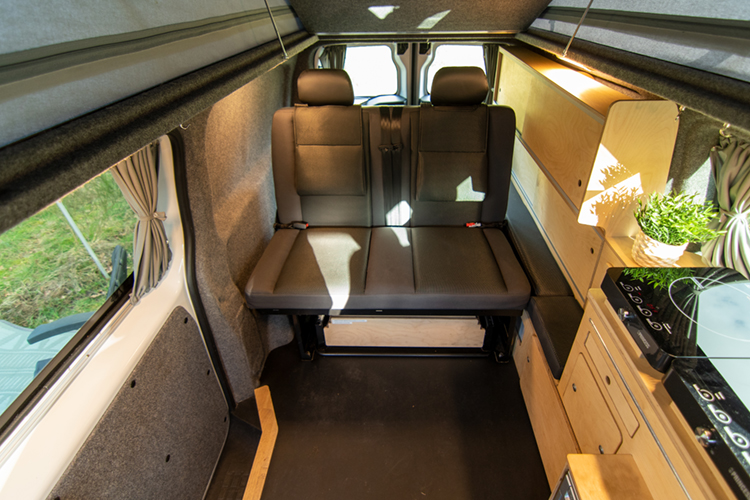
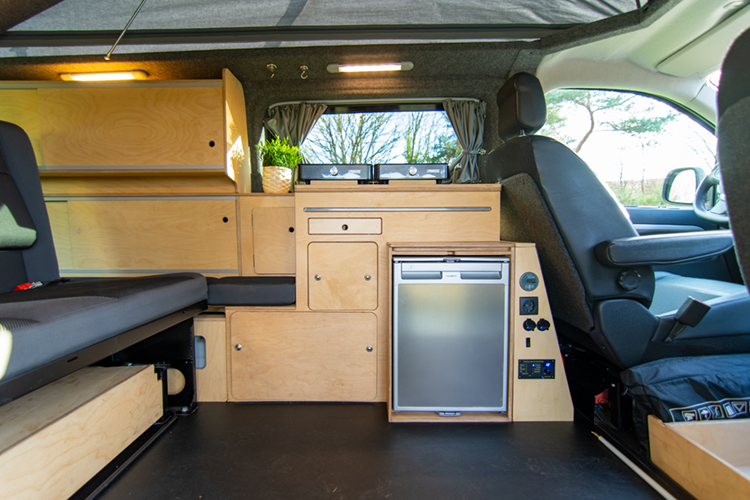
Based on the Peugeot Expert, the Fixxter was created in the Netherlands. The pop-top roof, the interior and the technical installation are of Dutch manufacture. The body is made camper-ready by VDL in Born and the interior by Camperfix. The interior of the Fixxter XXL consists of a cupboard, a compact pantry with two induction hobs, a pull-out table, an RDW approved sofa bed and a large number of storage spaces. The interior of the XXL version has more cupboard space, a larger kitchen and a larger refrigerator than the regular version.
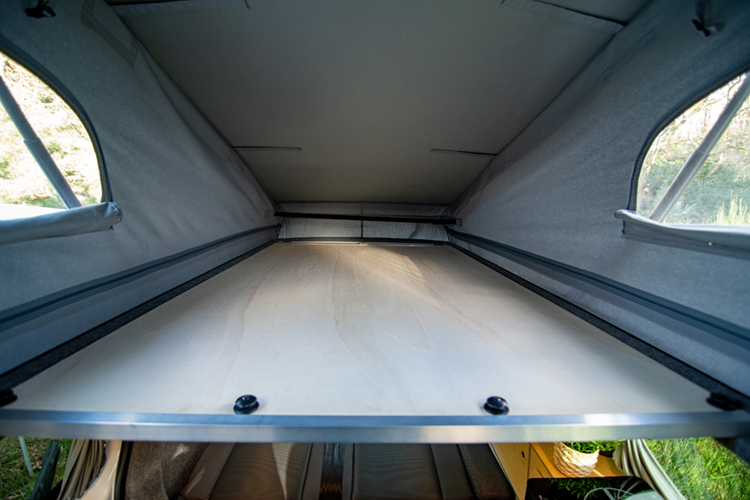
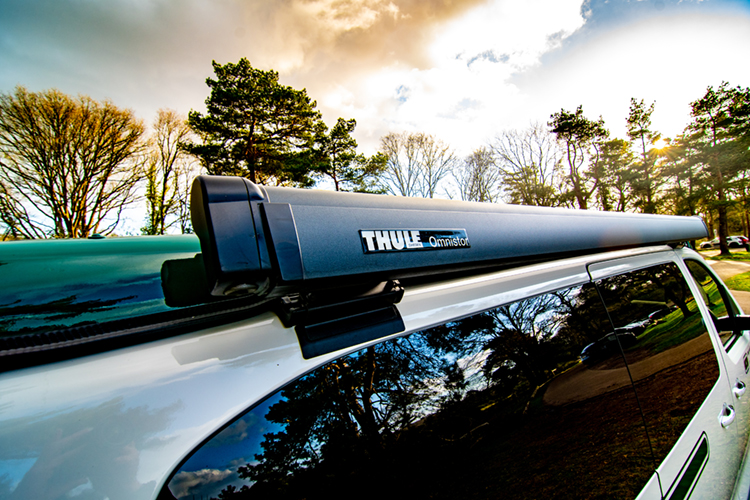
Pop-top roof
The sofa bed is movable, but without rails on the floor. The patented system transforms into a sofa bed with a width of 120 cm. With an extension mattress in the cupboard and kitchen, the total width of the bed is a generous 135 cm. In this camper class, 112.5 cm is common. The length of the bed is 200 cm and can be further increased to 210 cm.
It is also very nice that the bed is completely flat. No pre-formed lumbar supports that bother you when lying stretched out. The operation does require some getting used to. It also takes away some of the luggage space, but in return you get a flat floor without rails. In the pop-top roof, a second double bed can also be created. But without a couple of children, you will probably use this as an attic or, folded up, for a decent standing height. Another nice option is to zip away the canvas, creating a convertible or your own roof terrace.
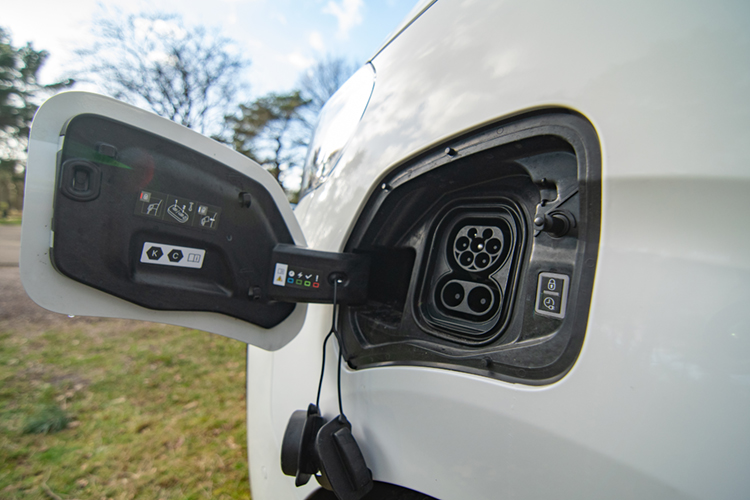
Fully Electric
100% electric has been the starting point, so cooking or heating is done via the battery or the mains. A large area of solar panels is on the pop-top roof, and there is an extra large 200 Ah household battery on board. A porta-potti has found a place in a specially made cabinet. Camping for three days without further facilities is no problem at all.
Important for every electric car is, of course, the range. With the interior, occupants and some luggage, this comes out to about 250 km. A substantial 75 kW battery pack is responsible for this. Under the floor, this provides a low center of gravity and good road holding. Charging the batteries can be done via a regular socket, for example at the campsite, but that takes a bit long.
Charging at a public fast charging point is a different story. There are currently about 185,000 of them in Europe, and here an e-refuel only takes half an hour. Then the batteries are 80% full and you can go another 200 km. For a stressed courier, that's not so nice, but in its function as a camper, it actually works out well. Taking a half-hour break every 200 km is not a punishment. It rather slows you down, and that fits perfectly with the nature of a motorhome.
Driving this e-bus also calms you down. Dominating the dashboard is an econometer that makes you prefer not to go too fast because then kilometers are deducted from your range very quickly. The temperature also plays a role. In winter, at 0 degrees, about 10% of the capacity is lost. Apart from the range, which is three times greater than that of a diesel, there are no differences in use and driving behavior.
The e-Fixxter drives approximately the same as an Expert with a 1.5 HDI that delivers 100HP. It's not a traffic light sprinter, but keeping up with traffic is never a problem. The top speed is above 130 km/h. Of course, the silence is striking. A modern diesel doesn't make that much noise, but you do hear them. That drone is missing in the e-Fixxter, what remains is the sound of the tires on the asphalt.
The equipment provided by EV Camper is complete for four people. In addition, you can book a few nice extras such as a Segway-Ninebot Kickscooter Max G30. This makes you mobile for a few groceries. It has a range of up to 65 km, and reaches a speed of up to 30 km/h. A canopy and outdoor furniture are standard, and a rug for under the canopy has also been thought of.
XBus
Later this year, EV Camper will expand its offerings with a striking new electric design. The XBus is a modular van designed for passenger transport or as a commercial vehicle. A camper version has also been added. The modularity consists of changing the bodywork so that a camper can easily be transformed into, for example, a pick-up. You can also make the range almost as large as you wish with extra battery modules.
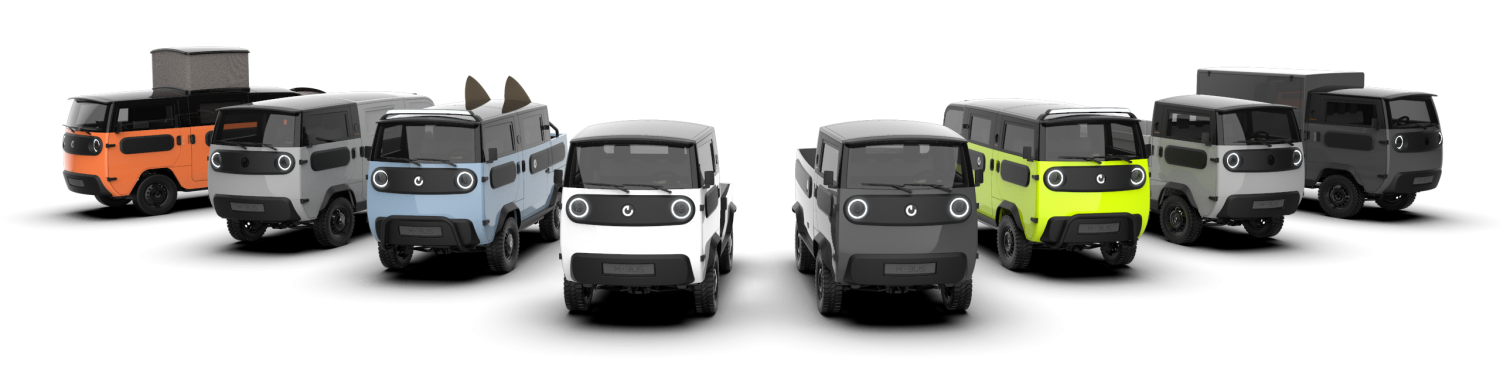
The XBus as a camper comes with a 30-kWh battery, good for about 600 kilometers of range. With solar panels on the roof, it charges itself. On a sunny day, this provides 200 kilometers of free electricity for you. With short stages, that results in a fuel bill of 0, the dream of every fossil driver.
The XBus drives four wheels as standard with 75 hp, but even more important is the torque of a hefty 1,000 Nm which is always available. The top speed is above 100 km/h. Given the dimensions, faster is not necessary. Charging takes about three hours. Fast charging along the highway is not (yet) possible with it. But with a 600 km range, that is manageable.
Slide-out
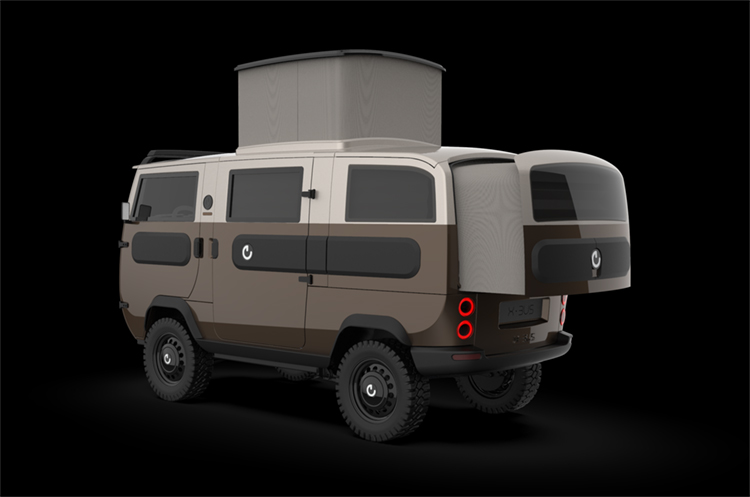
The interior, in addition to its VW T2-like appearance, is also extremely striking. In a length of less than 4m, the same has been realized as in any other compact bus camper. The roof goes straight up for standing height inside. And at the rear, a substantial slide-out provides a generous bed. A refrigerator, TV, hob, water tank and sink are also provided. Driving the XBus is like driving my first Tesla. A large screen on the center console and some buttons on the steering wheel keep it sleek and clear.
Compact Comfort
The e-Fixxter and the XBus form an interesting duo in EV Camper's offering. Apart from the range, the e-Fixxter does not differ in appearance and use from the same base equipped with an internal combustion engine. However, it is visible that this base was not designed from the ground up for an electric drive. Where previously the diesel was under a cover, now the systems for the new propulsion are placed. This all fits perfectly, but it also means that space is used less efficiently. This is not the case with the XBus, which allows more camper to be realized in even more compact exterior dimensions.
In addition to the ideology of making camper rental greener with sustainable camping equipment, EV Camper has another good reason to rent out electric campers. Maintenance costs are low and a bad driver, for example, cannot overload a cold diesel or abuse a gearbox. With few moving parts, little can break, something that has already been proven with the e-Fixxter. But although electric driving is not new at all, this applies to its application as a camper. The Fixxter is the first series-built electric camper. To experience for yourself how such a camping vehicle behaves, renting is a solution. From € 80,- per day you will find out, with a good chance that your first or next own camper will be allowed into the environmental zone emission-free.
For more information: ev-camper.eu